
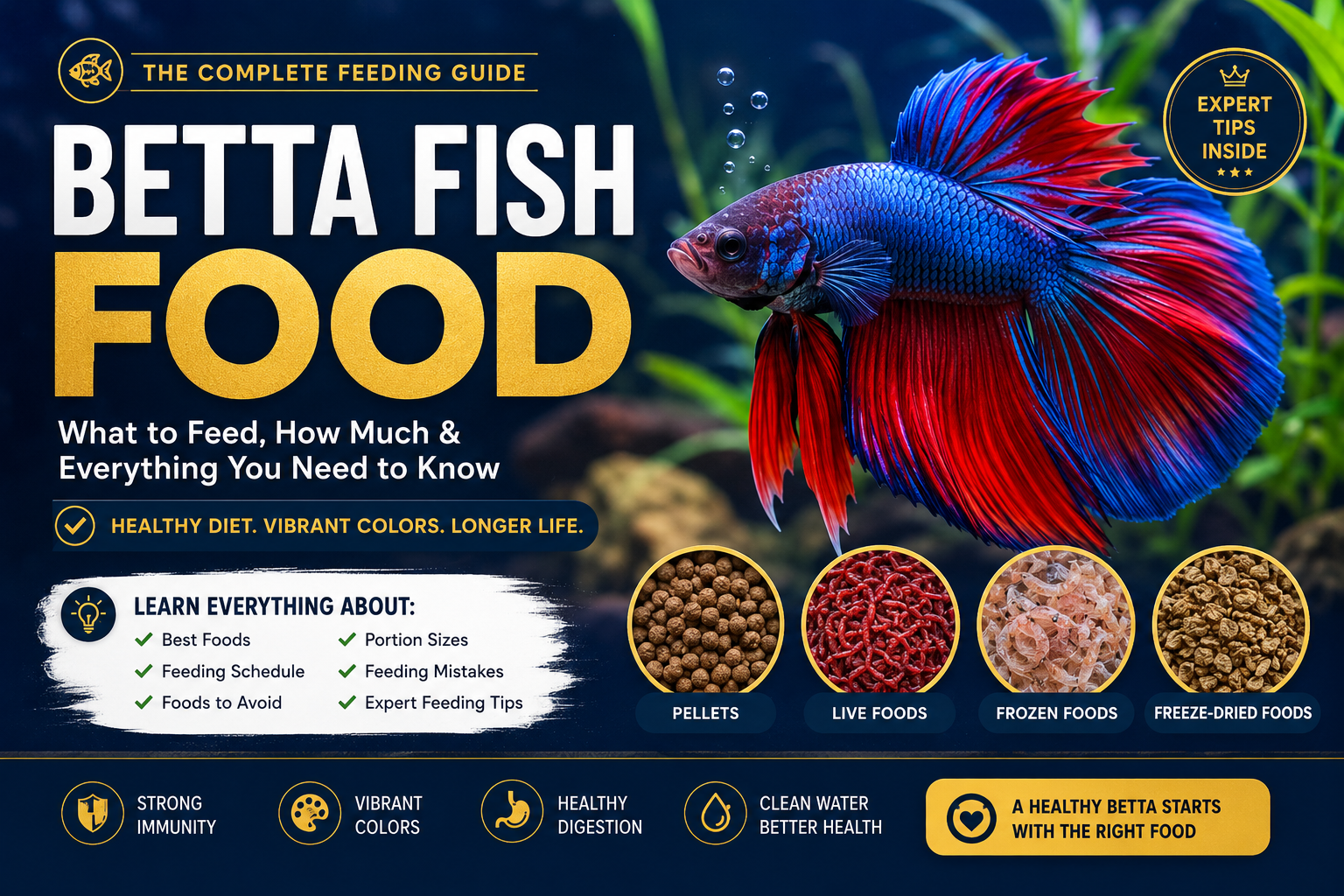
Discover the best Betta fish food, feeding schedule, portion sizes, foods to avoid, and expert feeding tips to keep your Betta healthy, colorful, and thriving.
- Buying Tip: Don’t choose Betta fish food based on the picture on the package. Turn it over and read the ingredient list. The first ingredients matter far more than the marketing claims on the front.
Table of Contents
Introduction
Feeding a Betta fish may seem simple, but providing the right nutrition is one of the most important parts of keeping your fish healthy. A proper diet doesn’t just satisfy hunger—it supports vibrant colors, healthy fin growth, a strong immune system, and can even help your Betta live a longer life. On the other hand, poor feeding habits can lead to obesity, digestive problems, poor water quality, and common health issues such as constipation and swim bladder disorder.
Unlike many community fish, Betta fish are natural carnivores. In the wild, they hunt insect larvae, small crustaceans, mosquito larvae, and other tiny aquatic organisms found near the surface of slow-moving waters. Their digestive system is designed for a protein-rich diet, which means not every fish food sold in pet stores is suitable for them. Choosing the right food—and knowing how much and how often to feed—is just as important as selecting a quality aquarium.
With so many options available, from pellets and frozen foods to live and freeze-dried treats, it’s easy for new Betta owners to feel overwhelmed. Questions like What is the best food for Betta fish?, How many pellets should I feed?, or Can Bettas eat goldfish food? are among the most common concerns for beginners.
In this complete feeding guide, you’ll learn everything you need to know about Betta fish nutrition, including the best foods to offer, feeding schedules, portion sizes, foods to avoid, common feeding mistakes, and practical tips to keep your Betta healthy and active. Whether you’ve just brought home your first Betta or want to improve your current feeding routine, this guide will help you make informed decisions with confidence.
Quick Answer: Betta fish are carnivorous freshwater fish that require a protein-rich diet to stay healthy. High-quality Betta pellets should form the foundation of their daily meals, while frozen or live foods such as bloodworms, brine shrimp, daphnia, and mosquito larvae can be offered as occasional treats. Adult Bettas generally need 2–4 small pellets once or twice a day, depending on their size and activity level. Avoid overfeeding, remove uneaten food promptly, and include one fasting day each week to support healthy digestion and maintain good water quality.
Betta Fish Feeding at a Glance
If you’re looking for a quick overview, the table below summarizes the most important feeding guidelines for Betta fish. While the rest of this guide explains each topic in detail, these recommendations provide a reliable starting point for most healthy adult Bettas.
| Category | Recommendation |
| Diet Type | Carnivorous (high-protein diet) |
| Best Staple Food | High-quality Betta pellets |
| Treat Foods | Frozen or live bloodworms, brine shrimp, daphnia, mosquito larvae |
| Foods to Avoid | Bread, rice, goldfish food, tropical flakes, dairy products, processed human foods |
| Feeding Frequency | Once or twice daily |
| Portion Size | 2–4 small pellets per feeding or an equivalent amount of live/frozen food |
| Fasting Day | Once per week to support healthy digestion |
| Juvenile Feeding | Small meals twice daily |
| Adult Feeding | One or two controlled feedings each day |
| Uneaten Food | Remove within a few minutes to maintain water quality |
Beginner Tip: A Betta’s stomach is only about the size of its eye. Feeding small, controlled portions is much healthier than offering large meals, even if your fish appears eager to eat.
What Do Betta Fish Eat?
Understanding what Betta fish eat in their natural habitat is the key to feeding them correctly in an aquarium. Many beginner fish keepers assume Bettas can eat any type of fish food, but that’s one of the most common mistakes. Although they may accept a variety of foods, Bettas have evolved as carnivorous predators, meaning their bodies are designed to digest animal-based proteins rather than plant-based ingredients.
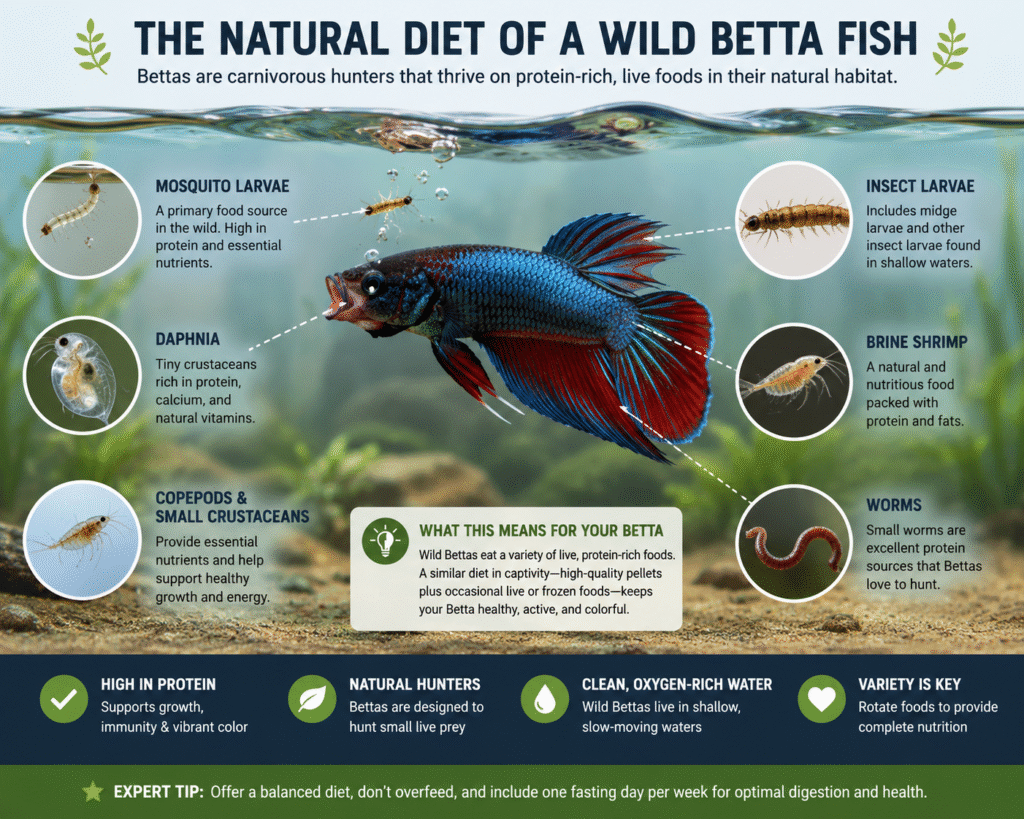
In the wild, Betta fish spend much of their time hunting for small prey near the water’s surface. Their natural diet consists mainly of mosquito larvae, insect larvae, tiny crustaceans, worms, zooplankton, and other small aquatic invertebrates. These betta fish foods are naturally rich in protein, healthy fats, and essential nutrients that support growth, muscle development, vibrant coloration, and reproduction.
Unlike herbivorous or omnivorous fish, Bettas have a short digestive tract, which is better suited for processing protein-rich foods. Because of this, diets that contain excessive plant fillers such as wheat, corn, soy, or rice provide little nutritional value and can contribute to digestive issues over time. This is why choosing food specifically formulated for Betta fish is much better than using generic tropical fish flakes or goldfish food.
When kept in an aquarium, your goal should be to recreate their natural diet as closely as possible. High-quality Betta pellets should serve as the staple food because they are formulated to meet the nutritional needs of carnivorous fish. To provide additional variety and enrichment, you can occasionally offer frozen or live foods such as bloodworms, brine shrimp, daphnia, and mosquito larvae. Rotating different food sources helps ensure your Betta receives a balanced diet while also encouraging natural hunting behaviors.
It’s important to remember that variety is beneficial, but moderation is equally important. Feeding too many treats—even healthy ones—can lead to obesity, constipation, poor water quality, and other health problems. A balanced feeding routine with controlled portions is far healthier than offering large amounts of food.
Did You Know? A Betta fish’s stomach is roughly the size of one of its eyes. Even though Bettas often appear hungry and may beg for food whenever you approach the aquarium, overfeeding is one of the leading causes of health problems in captive Betta fish.
Related: Betta Fish Care: Complete Beginner’s Guide (2026)
Best Betta Fish food
Choosing the best betta fish food for your Betta fish isn’t about buying the most expensive product on the shelf—it’s about providing a diet that closely matches what Bettas naturally eat in the wild. Since Bettas are carnivorous fish, they require foods that are rich in high-quality animal protein rather than plant-based fillers.
A balanced Betta diet should consist of a nutritious staple food combined with occasional protein-rich treats. This combination helps maintain healthy growth, vibrant coloration, strong fins, a healthy immune system, and normal digestion.
Below are the best food options for Betta fish, ranked by their nutritional value and how often they should be offered.
1. Betta Fish Food Pellets: Are They the Best Choice?
For most Betta owners, high-quality Betta pellets are the best everyday food. They are specially formulated to provide the balanced nutrition Bettas need while being convenient, affordable, and easy to store. When chosen carefully, pellets supply the right combination of protein, healthy fats, vitamins, and minerals to support growth, vibrant coloration, strong fins, and a healthy immune system.
Unlike generic tropical fish food, Betta pellets are designed specifically for carnivorous fish. This means they contain a much higher percentage of animal-based protein and fewer unnecessary fillers. A quality pellet can meet most of your Betta’s nutritional requirements, making it an excellent staple food for daily feeding.
However, not all pellets are created equal. Some inexpensive brands contain excessive amounts of wheat, corn, soy, or other fillers that offer little nutritional value. Feeding these foods over a long period may contribute to poor digestion, dull coloration, and reduced overall health.
| Food Type | Protein | Frequency | Best For |
| Pellets | ⭐⭐⭐⭐⭐ | Daily | Staple diet |
| Live Foods | ⭐⭐⭐⭐⭐ | Natural hunting & | enrichment |
| Frozen Foods | ⭐⭐⭐⭐☆ | 2–3× weekly | Safe, nutritious treats |
| Freeze-Dried | ⭐⭐⭐☆☆ | Occasionally | Convenience |
| Flakes | ⭐⭐☆☆☆ | Backup option | Occasional use |
What to Look for in High-Quality Betta Pellets
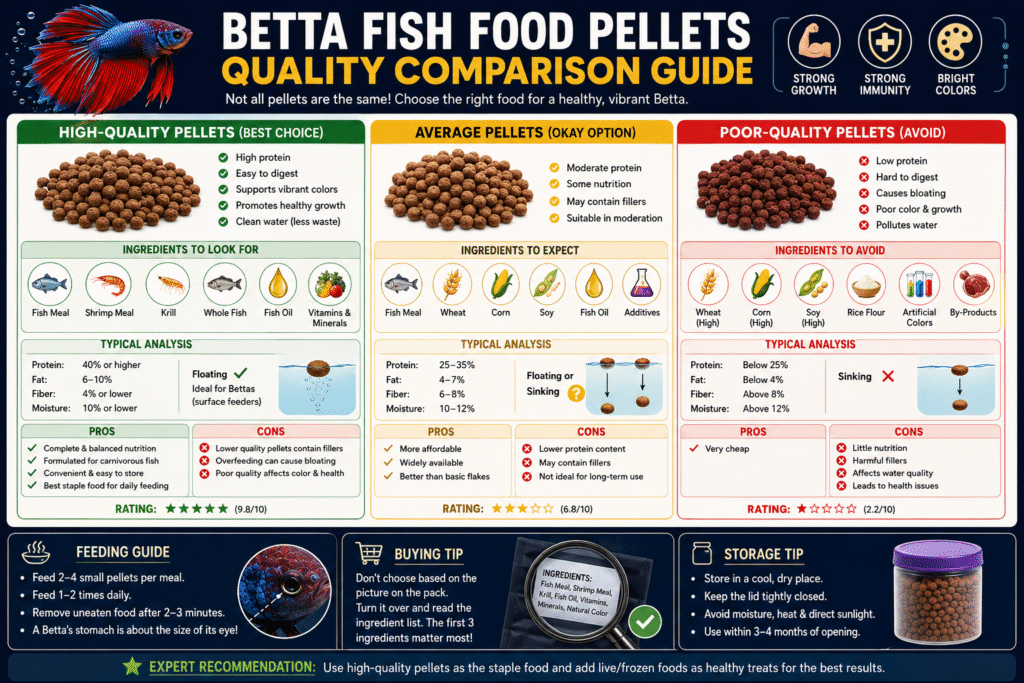
Before buying any Betta food, take a moment to read the ingredient label. The first few ingredients tell you far more about the quality of the food than the packaging claims.
Look for pellets that contain:
- Whole fish or fish meal
- Shrimp meal
- Krill
- Insect protein
- Salmon meal
- Fish oil
- Natural vitamins and minerals
Avoid foods where the first ingredients are:
- Wheat
- Corn
- Soy
- Rice flour
- Artificial colors in large amounts
A simple rule is this: the higher the animal protein content, the better the food is likely to be for your Betta.
Should You Soak Betta Pellets Before Feeding?
This is a question many beginners ask, and the answer depends on the type of pellet you’re using.
Some Betta pellets absorb water quickly and expand after being eaten. In these cases, soaking the pellets in a small amount of aquarium water for 30–60 seconds before feeding may reduce the risk of bloating, especially for Bettas that swallow food very quickly.
However, many modern premium pellets are designed to soften rapidly in the water and generally don’t require pre-soaking. If the manufacturer doesn’t recommend soaking and your Betta has no history of digestive issues, you can usually feed them directly.
How Many Pellets Should You Feed?
Because a Betta’s stomach is very small, portion control is essential.
As a general guideline:
- Feed 2–4 small pellets per meal.
- Feed once or twice a day, depending on your Betta’s size, age, and activity level.
- Remove any uneaten pellets after a few minutes to prevent them from polluting the water.
If your pellets are unusually large, adjust the quantity accordingly. It’s always safer to feed a little less than too much.
Signs You’re Feeding the Right Pellets
A Betta receiving a balanced diet will usually show clear signs of good health, including:
- Bright, vibrant coloration
- Active swimming and curiosity
- Healthy fin growth
- Strong appetite
- Well-proportioned body shape
- Consistent energy levels
If your Betta becomes sluggish, develops bloating, or frequently refuses food, review both the quality and quantity of the pellets you’re offering. Water quality and overall tank conditions should also be checked, as they can affect appetite and digestion.
Expert Tip
Rather than buying the largest container available, choose a smaller pack that your Betta can finish within a few months. Fish food gradually loses nutritional value after opening, especially if it’s exposed to heat, moisture, or direct sunlight. Store pellets in a cool, dry place with the lid tightly sealed to keep them fresh for as long as possible.
Live Betta Fish food
Live foods are the closest thing to what Betta fish eat in their natural habitat. In the shallow rice paddies, marshes, and slow-moving waters of Southeast Asia, Bettas spend much of their day hunting tiny aquatic creatures rather than waiting for food to be dropped into the water. This instinctive hunting behavior is deeply rooted in their biology and remains just as strong in aquarium-raised Bettas today.
Because live foods closely resemble their natural diet, they provide more than just nutrition. They also offer mental stimulation, encourage exercise, and trigger natural hunting instincts that help keep Bettas active and engaged. Many experienced aquarists consider live foods one of the best ways to improve a Betta’s overall condition, especially when conditioning fish for breeding or helping underweight Bettas regain strength.
However, live betta fish food should be viewed as a supplement rather than a complete replacement for a balanced pellet diet. While they are highly nutritious, they also require careful sourcing and handling to avoid introducing harmful parasites or bacteria into the aquarium.
Why Live Foods Are Beneficial
Feeding live foods provides several advantages that go beyond basic nutrition.
When a Betta actively hunts its prey, it behaves much as it would in the wild. This natural activity provides physical exercise, reduces boredom, and offers valuable mental enrichment. Many owners notice that Bettas become more alert, energetic, and responsive after live food feedings.
Live foods are also naturally rich in high-quality protein and healthy fats, which support:
- Healthy muscle development
- Strong fin growth
- Enhanced coloration
- Improved immune function
- Better breeding condition
- Faster recovery after illness
For Bettas that are recovering from stress or have recently lost weight, live foods can be an excellent way to stimulate appetite and encourage healthy weight gain.
Best Live Foods for Betta Fish
Not all live foods offer the same nutritional benefits. Some are ideal as regular treats, while others should only be fed occasionally.
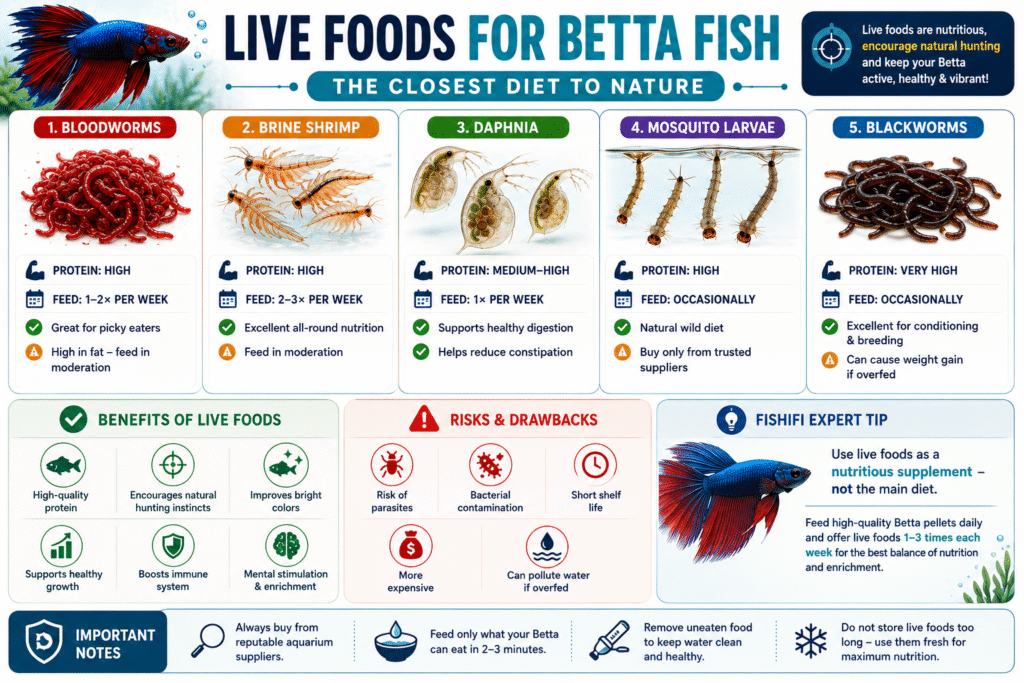
- Bloodworms
Bloodworms are one of the most popular live Betta fish food because they are highly attractive and rich in protein. Most Bettas eagerly accept them, making them useful for picky eaters or fish recovering from illness.
Benefits
✔ Excellent protein source
✔ Encourages feeding response
✔ Helps improve body condition
Limitations
Because bloodworms are relatively high in fat, feeding them too frequently may contribute to obesity and digestive problems. They should be offered as an occasional treat rather than a daily meal.
Recommended frequency: Once or twice each week.
- Brine Shrimp
Brine shrimp are widely regarded as one of the healthiest live foods available for Bettas. They provide a balanced combination of protein, healthy fats, and important nutrients while being easier to digest than many other live foods.
Brine shrimp also enhance natural coloration and encourage active hunting behavior.
Recommended frequency: One to three times each week.
- Daphnia
Often called “water fleas,” daphnia are among the best live foods for maintaining healthy digestion. Unlike bloodworms, daphnia contain a high amount of natural fiber, which helps reduce constipation and may lower the risk of swim bladder issues caused by overfeeding. Many experienced fish keepers even use daphnia after a fasting day to help regulate digestion.
Recommended frequency: Once each week.
- Mosquito Larvae
Mosquito larvae form a significant part of a wild Betta’s natural diet. They are extremely nutritious and encourage vigorous hunting behavior. If purchasing mosquito larvae, always buy them from reputable aquarium suppliers rather than collecting them outdoors. Outdoor sources may contain pesticides, parasites, or harmful bacteria that can threaten your Betta’s health.
- Blackworms
Blackworms are another highly nutritious live food often used to condition breeding fish. Although rich in protein, they should be fed sparingly because they can contribute to rapid weight gain if overused.
Advantages of Feeding Live Betta Fish Food
- Closely mimics a Betta’s natural diet.
- Extremely high nutritional value
- Encourages natural hunting instincts
- Improves activity levels
- Helps maintain vibrant coloration
- Supports breeding condition
- Excellent appetite stimulant
Disadvantages of Live Foods
Despite their many benefits, live foods also have some drawbacks.
- Risk of introducing parasites
- Possible bacterial contamination
- Short shelf life
- More expensive than pellets
- Require careful storage
- Not always readily available
For these reasons, most experts recommend using live foods alongside a high-quality pellet diet rather than relying on them exclusively.
Common Mistakes to Avoid
Many beginners unintentionally make mistakes when feeding live foods.
Avoid these common errors:
1. Feeding only bloodworms
2. Collecting insects from outdoor ponds
3. Overfeeding live foods
4. Leaving uneaten prey inside the aquarium
5. Purchasing from unreliable suppliers
Small mistakes like these can quickly affect both your Betta’s health and your aquarium’s water quality.
Expert Tip
If you’re introducing live foods, start with small portions and observe your Betta’s response. A varied feeding routine that combines high-quality pellets with occasional live foods offers the best balance of nutrition, enrichment, and convenience.
Related: Betta Fish Flaring, Is It a Cause for Concern?
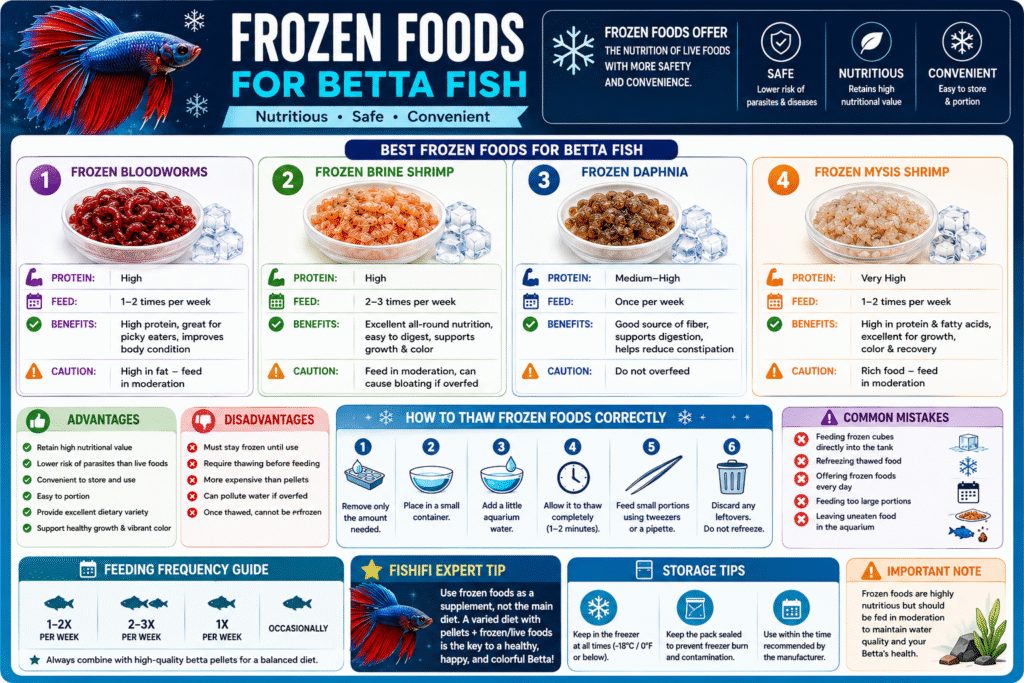
Frozen Foods for Betta Fish
Frozen foods are one of the best alternatives to live foods for Betta fish. They provide many of the same nutritional benefits while reducing the risks associated with feeding live prey, such as parasites and harmful bacteria. For many Betta owners, frozen foods offer the perfect balance between convenience, safety, and nutrition.
Because the freezing process preserves much of the food’s natural nutritional value, frozen foods remain rich in protein, amino acids, and essential nutrients that support healthy growth, vibrant coloration, and a strong immune system. They also allow Betta owners to offer a more varied diet without the challenges of keeping live food cultures.
While frozen foods should not completely replace high-quality Betta pellets, they are an excellent supplement that helps recreate the variety Bettas would experience in their natural habitat.
Why Frozen Betta Fish Food Is a Great Choice
Frozen foods combine many of the benefits of live foods with greater convenience and safety.
Unlike live foods, frozen foods are easier to store, have a longer shelf life, and are less likely to introduce parasites or diseases into your aquarium. They also retain much of their original nutritional value when properly frozen and thawed.
Many experienced aquarists recommend frozen foods as the best option for Betta owners who want to improve their fish’s diet without the extra maintenance required for live food.
Best Frozen Foods for Betta Fish
- Frozen Bloodworms
Frozen bloodworms are one of the most popular frozen foods available for Betta fish. They are rich in protein and highly attractive to Bettas, making them useful for encouraging picky eaters.
Benefits
- High protein content
- Encourages feeding
- Helps improve body condition
Limitations
Because bloodworms are relatively high in fat, they should only be offered occasionally rather than every day.
Recommended frequency: 1–2 times per week.
- Frozen Brine Shrimp
Frozen brine shrimp provide an excellent combination of protein and healthy fats while being easy to digest.
They are suitable for regular supplemental feeding and help maintain healthy coloration and activity.
Recommended frequency: 2–3 times per week.
- Frozen Daphnia
Frozen daphnia are an excellent choice for Bettas that are prone to digestive problems.
Their natural fiber content supports healthy digestion and can help reduce constipation caused by overfeeding.
Recommended frequency: Once each week.
- Frozen Mysis Shrimp
Mysis shrimp are packed with protein and beneficial fatty acids, making them one of the most nutritious frozen foods available.
They are particularly useful for larger adult Bettas and fish recovering from illness or stress.
Because they are relatively rich, they should be fed in moderation.
Advantages of Frozen Foods
- Retain high nutritional value
- Lower risk of parasites than live foods
- Convenient to store
- Easy to portion
- Excellent dietary variety
- Supports healthy coloration and growth
Disadvantages of Frozen Foods
- Must remain frozen until use
- Require thawing before feeding
- More expensive than pellets
- Can pollute water if overfed
- Once thawed, they cannot be refrozen
How to Thaw Frozen Betta Fish Food Correctly
Proper thawing is important to protect your Betta’s digestive system and maintain water quality.
Follow these simple steps:
- Remove only the amount needed for one feeding.
- Place it in a small container.
- Add a little aquarium water.
- Allow it to thaw completely.
- Feed small portions using tweezers or a pipette.
- Discard any leftovers—never refreeze thawed food.
Common Mistakes to Avoid
- Feeding frozen cubes directly into the tank
- Refreezing thawed food
- Offering frozen foods every day
- Feeding portions that are too large
- Leaving uneaten food in the aquarium
Fishifi Expert Tip
Frozen betta fish food is one of the safest ways to introduce dietary variety into your Betta’s feeding routine. Use them as a supplement to high-quality pellets rather than a replacement, and always thaw food completely before feeding to support healthy digestion.
Related: Cleaning and Maintaining Betta Fish Tank
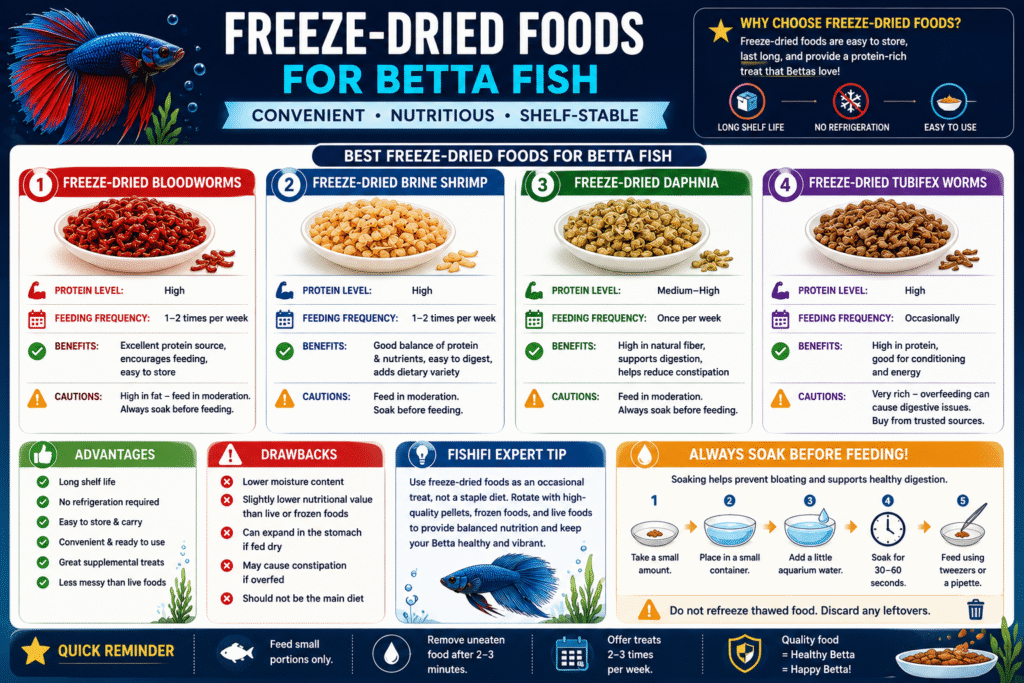
Freeze-Dried Foods for Betta Fish
Freeze-dried foods are a popular choice among Betta fish owners because they are convenient, easy to store, and available in almost every aquarium store. While they don’t completely match the nutritional quality of live or frozen foods, they can still be a valuable part of a balanced feeding routine when used correctly.
During the freeze-drying process, moisture is removed from the food while preserving much of its nutritional value. This creates lightweight foods with a long shelf life that don’t require refrigeration. Common freeze-dried options include bloodworms, brine shrimp, daphnia, tubifex worms, and krill.
Although Bettas usually enjoy freeze-dried foods, they should be considered an occasional supplement, not a replacement for high-quality Betta pellets or fresh frozen foods.
Why Choose Freeze-Dried Foods?
Freeze-dried foods are ideal for Betta owners who want to add variety to their fish’s diet without the hassle of maintaining live food or storing frozen cubes.
Because they are lightweight and shelf-stable, they are easy to keep at home and can be used whenever you want to provide your Betta with an occasional protein-rich treat.
For beginners, freeze-dried betta fish food is often the easiest way to introduce dietary variety while keeping feeding simple.
Best Freeze-Dried Foods for Betta Fish
- Freeze-Dried Bloodworms
Freeze-dried bloodworms are one of the most popular treats for Betta fish. They are rich in protein and usually accepted eagerly, making them useful for picky eaters.
Benefits
- Excellent protein source
- Encourages feeding
- Easy to store
Limitations
Because they lose moisture during processing, feeding them dry may contribute to bloating or constipation. They should always be rehydrated before feeding.
Recommended frequency: Once or twice per week.
- Freeze-Dried Brine Shrimp
Brine shrimp provide a good balance of protein and nutrients while remaining easy to digest after rehydration. They are a healthier treat than many processed fish foods and help provide dietary variety.
Recommended frequency: One or two times each week.
- Freeze-Dried Daphnia
Daphnia remains one of the best freeze-dried options for digestive health. Their natural fiber content supports healthy digestion and may help reduce constipation, especially after feeding richer foods such as bloodworms.
Recommended frequency: Once each week.
- Freeze-Dried Tubifex Worms
Tubifex worms are highly nutritious but should only be offered occasionally. Although protein-rich, overfeeding can lead to digestive problems and excessive calorie intake. Always purchase tubifex worms from reputable aquarium suppliers to reduce the risk of contamination.
Nutritional Benefits
When used correctly, freeze-dried foods offer several nutritional advantages.
They provide:
- High-quality animal protein
- Essential amino acids
- Healthy fats
- Natural feeding enrichment
- Additional dietary variety
Although the nutritional value is slightly lower than fresh or frozen foods, freeze-dried options remain an excellent supplement to a pellet-based diet.
Advantages of Freeze-Dried Foods
- Long shelf life
- No refrigeration required
- Easy to store
- Convenient for travel
- Readily available
- Excellent occasional treats
- Less messy than live foods
Drawbacks of Freeze-Dried Foods
Despite their convenience, freeze-dried foods also have some disadvantages.
- Lower moisture content
- Slightly reduced nutritional value compared with live foods
- Can expand inside the digestive system if fed dry
- May contribute to constipation
- Should never become the main daily diet
These drawbacks are easy to manage by using freeze-dried foods in moderation and rehydrating them before feeding.
Should You Soak Freeze-Dried Foods?
Yes—this is one of the most important steps.
Because freeze-dried foods absorb water rapidly, soaking them in a small amount of aquarium water for 30–60 seconds before feeding helps soften the food and reduces the risk of bloating or digestive discomfort.
Many experienced aquarists consider this simple habit one of the best ways to prevent feeding-related health problems.
Common Mistakes to Avoid
Avoid these common mistakes:
- Feeding freeze-dried foods without soaking them
- Offering them every day
- Overfeeding protein-rich treats
- Leaving uneaten food in the aquarium
- Using old or expired products
Small changes in feeding habits can make a big difference to your Betta’s long-term health.
Fishifi Expert Tip
Freeze-dried foods are best used as a convenient treat rather than a staple diet. Rehydrate them before feeding and rotate them with pellets, frozen foods, and live foods to provide balanced nutrition and reduce the risk of digestive problems.
Betta Fish Flakes
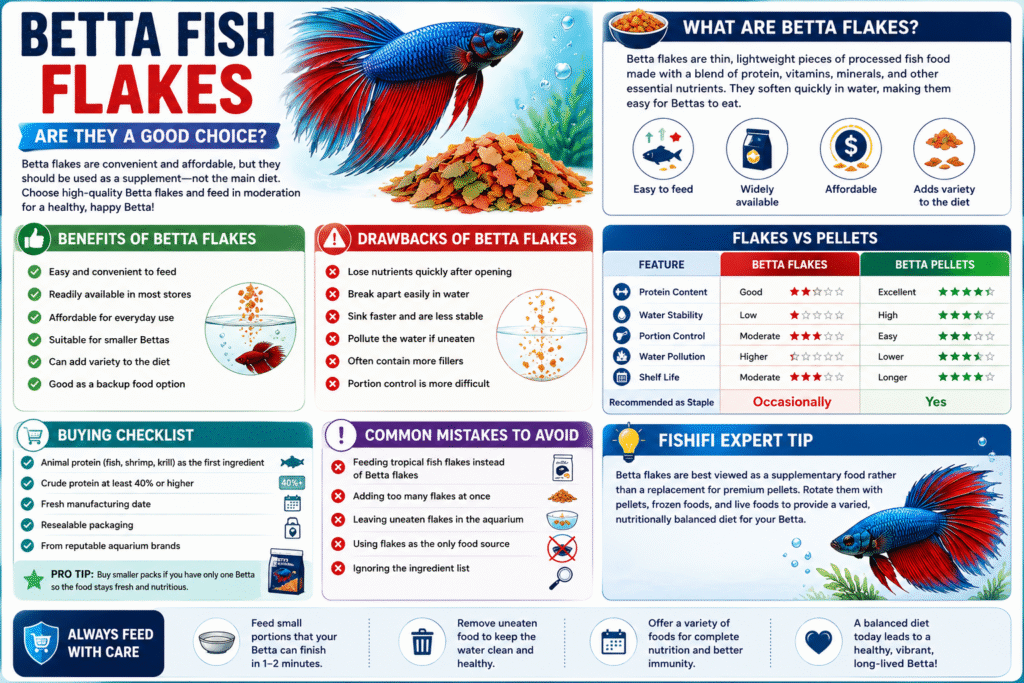
Although Betta fish flakes are readily available in most pet stores, they are generally not considered the best primary Betta fish food. High-quality Betta pellets usually provide better nutrition, remain stable in water for longer, and make portion control easier. However, Betta-specific flakes can still be a useful option when chosen carefully and fed in moderation.
The biggest mistake many beginners make is assuming that all fish flakes are the same. Generic tropical fish flakes and goldfish flakes are formulated for species with different nutritional needs. Since Betta fish are carnivores, they require a protein-rich diet, while many general-purpose flakes contain larger amounts of plant-based ingredients and fillers that provide limited nutritional value.
If you choose to feed flakes, always select products specifically labeled for Betta fish rather than flakes designed for community or goldfish aquariums.
What Are Betta Fish Flakes?
Betta fish flakes are thin, lightweight pieces of processed fish food formulated to provide essential nutrients in a convenient form. They usually contain a mixture of fish meal, shrimp meal, vitamins, minerals, and other ingredients designed to meet the dietary needs of Bettas.
Compared with pellets, flakes soften quickly after entering the water, making them easier for some Bettas to eat. However, because they break apart more easily, they can also create more waste if uneaten.
Nutritional Value of Betta Flakes
Good-quality Betta flakes can provide:
- Animal-based protein
- Healthy fats
- Essential vitamins
- Trace minerals
- Natural color enhancers
However, nutritional quality varies greatly between brands.
When buying flakes, check that the first ingredient is fish meal, whole fish, shrimp meal, or another animal protein rather than wheat, corn, or soy.
Benefits of Betta Fish Flakes
Quality Betta flakes offer several advantages:
✅ Easy to feed
✅ Readily available
✅ Affordable
✅ Suitable for smaller Bettas
✅ Can add variety to the diet
They are especially useful as a backup food when pellets are temporarily unavailable.
Drawbacks of Betta Fish Flakes
Despite their convenience, flakes have several disadvantages compared with pellets.
They:
- Lose nutrients more quickly after opening.
- Break apart easily.
- Sink faster than pellets.
- Pollute the water if uneaten.
- Often contain more fillers.
- Make portion control more difficult.
For these reasons, flakes are generally considered a secondary betta fish food rather than the best daily staple.
Betta Flakes vs Betta Pellets
Although both products are made specifically for Bettas, pellets generally offer better long-term nutrition.
| Feature | Betta Flakes | Betta Pellets |
|---|---|---|
| Protein Content | Good | Excellent |
| Water Stability | Low | High |
| Portion Control | Moderate | Easy |
| Water Pollution | Higher | Lower |
| Shelf Life | Moderate | Longer |
| Recommended as Staple | Occasionally | Yes |
For most Betta owners, pellets should remain the primary food, while flakes can be used occasionally for variety.
Common Mistakes When Feeding Flakes
Avoid these common mistakes:
1. Feeding tropical fish flakes instead of Betta flakes.
2. Adding too many flakes at once.
3. Leaving uneaten flakes in the aquarium.
4. Using flakes as the only food source.
5. Ignoring the ingredient list.
Small adjustments to your feeding routine can significantly improve your Betta’s health and water quality.
Fishifi Buying Tips
Before purchasing Betta flakes, check:
- Animal protein listed as the first ingredient.
- At least 40% crude protein (or higher if available).
- Fresh manufacturing date.
- Resealable packaging.
- Products from reputable aquarium brands.
Avoid buying large containers if you have only one Betta, as the food may lose freshness before you finish it.
Fishifi Expert Tip
Betta flakes are best viewed as a supplementary food rather than a replacement for premium pellets. If you use flakes, rotate them with pellets, frozen foods, and live foods to create a varied and nutritionally balanced feeding routine.
How Much Should You Feed a Betta Fish?
One of the most common questions new Betta owners ask is, “How much should I feed my Betta fish?” While the answer may seem simple, feeding the correct amount is one of the most important factors in keeping your Betta healthy. Both overfeeding and underfeeding can lead to health problems, poor water quality, and a shorter lifespan.
Unlike many aquarium fish, Bettas have very small stomachs. A healthy Betta does not need large meals to stay active and well-nourished. In fact, their stomach is roughly the size of one of their eyes, which means even a small amount of food can be enough to meet their daily nutritional needs.
Many Bettas also have a strong feeding response and will continue eating whenever food is available. This behavior often tricks beginners into believing their fish is still hungry, leading to overfeeding. Learning to recognize the right portion size is one of the easiest ways to prevent digestive issues such as bloating, constipation, and swim bladder disorder.
Rather than focusing on feeding your Betta until it stops eating, it’s better to provide small, measured portions at regular intervals. A consistent feeding routine supports healthy digestion, keeps your aquarium cleaner, and helps your Betta maintain an ideal body condition.
The amount of food a Betta needs depends on several factors, including its age, size, activity level, metabolism, water temperature, and the type of food being offered. However, for most healthy adult Bettas, moderation is the key to long-term health.
As a general guideline:
1. High-Quality Pellets
- Feed 2–4 small Betta pellets per meal
- Offer 1–2 meals per day
2. Frozen or Live Foods
- Feed 2–4 small pieces depending on the food type.
- Offer as a supplement 1–3 times per week rather than every day.
3. Freeze-Dried Foods
- Feed 2–3 small pieces after soaking them in aquarium water.
- Use as an occasional treat.
Remember that different brands produce pellets of different sizes. If you’re using larger pellets, reduce the quantity accordingly. The goal is not to fill your Betta’s stomach but to provide enough nutrition without creating unnecessary waste.
A useful habit is to observe your Betta during feeding. Ideally, all the food should be eaten within one to two minutes. If food is left floating or sinks to the bottom of the tank, you’re probably feeding more than necessary.
Factors That Affect Feeding Amount
Not every Betta requires the same amount of food. Several factors influence how much your fish should eat.
- Age
Young Betta fry and juveniles grow rapidly and require more frequent feeding than adults. Older Bettas, on the other hand, tend to be less active and may naturally eat smaller portions.
- Activity Level
A Betta that actively explores the aquarium and swims throughout the day burns more energy than one that spends most of its time resting. More active fish may require slightly larger portions, while less active fish often do well with smaller meals.
- Water Temperature
Because Bettas are tropical fish, their metabolism is closely linked to water temperature. In warmer water within the recommended range (around 78–80°F / 25.5–26.5°C), they digest food efficiently. If the water is too cold, digestion slows down, and feeding large meals can lead to digestive problems.
- Food Type
Pellets, live foods, frozen foods, and freeze-dried foods all differ in density and moisture content. For example, freeze-dried foods expand after absorbing water, while frozen foods contain much more moisture. Adjust portion sizes based on the type of food you’re feeding rather than using the same quantity for every food.
How to Tell If You’re Feeding the Right Amount
A healthy feeding routine is reflected in your Betta’s appearance and behavior.
Signs You’re Feeding the Right Amount
- Bright, vibrant colors
- Active swimming
- Healthy appetite
- Smooth, well-proportioned body
- Clear eyes
- Steady growth in younger Bettas
- Clean water with very little leftover food
When these signs are present, your feeding routine is likely well balanced.
Fishifi Expert Tip
Don’t measure success by how much your Betta eats—measure it by how healthy your Betta looks and behaves. A fish that eagerly begs for food isn’t necessarily hungry. Bettas are opportunistic feeders by nature and will often eat more than they actually need if given the chance.
How Often Should You Feed a Betta Fish?
Knowing how much to feed your Betta is only half of the equation. Feeding at the right frequency is equally important. Even if you’re offering high-quality betta fish food, feeding too often can lead to obesity, digestive problems, poor water quality, and a higher risk of diseases such as constipation and swim bladder disorder.
Most healthy adult Betta fish thrive when fed once or twice a day. Instead of providing one large meal, many experienced aquarists prefer dividing the daily portion into two smaller feedings—one in the morning and one in the evening. This approach more closely matches a Betta’s natural feeding behavior, where they consume small prey throughout the day rather than one large meal.
However, there is no universal feeding schedule that works for every Betta. Factors such as age, water temperature, activity level, health, and the type of food being offered all influence how often your fish should be fed.
The goal isn’t simply to follow a timetable—it’s to establish a consistent routine that supports healthy digestion while preventing overfeeding.
Feeding Adult Betta Fish
Healthy adult Bettas generally do well with one or two small meals each day.
If you’re feeding premium Betta pellets, divide the daily amount into two equal meals whenever possible. Smaller, regular meals are easier to digest than one large feeding and reduce the likelihood of uneaten food polluting the aquarium.
A typical daily schedule might look like:
- 🌅 Morning: 2 small pellets
- 🌙 Evening: 2 small pellets
Adjust the quantity slightly based on pellet size and your Betta’s activity level.
Feeding Betta Fry
Young Betta fry grow rapidly and require much more energy than adults.
Because their bodies are developing quickly, they benefit from 3–5 very small feedings throughout the day using appropriately sized foods such as newly hatched brine shrimp, microworms, vinegar eels, or other fry-specific foods.
Frequent small meals support healthy growth without overwhelming their tiny digestive systems.
Feeding Juvenile Bettas
Juvenile Bettas are still growing but no longer require as many feedings as fry. Most juveniles do well with 2–3 small meals each day, gradually transitioning to the adult feeding schedule as they mature. Offering a variety of high-protein foods during this stage helps support healthy muscle development and vibrant coloration.
Feeding Senior Betta Fish
As Bettas age, they often become less active, and their metabolism slows. Older Bettas may naturally eat slightly less than younger fish. Continue feeding once or twice daily, but pay attention to their appetite and body condition. If your senior Betta begins leaving food behind or appears less interested in eating, reduce portion sizes rather than forcing them to finish larger meals.
Morning vs. Evening Feeding
Many Betta owners wonder whether it’s better to feed their fish in the morning or the evening.
The truth is that consistency is more important than the exact time of day. Bettas quickly learn routines and often become more active when they recognize feeding time.
If your schedule allows, feeding once in the morning and once in the evening provides a balanced routine that spreads betta fish food intake across the day. If you can only feed once daily, try to do so at approximately the same time each day.
Should You Feed Your Betta Every Day?
Yes—healthy adult Bettas should normally be fed every day.
The exception is a planned fasting day, which many experienced aquarists include once each week. Skipping one day of feeding allows the digestive system to rest and may help reduce the risk of bloating and constipation, particularly in Bettas that are fed protein-rich treats.
A fasting day should only be used for healthy fish. Bettas recovering from illness, very young fry, or fish that are underweight may require a different feeding approach.
Signs Your Feeding Schedule Is Working
A consistent feeding schedule usually produces noticeable signs of good health:
- Bright, vibrant coloration
- Strong appetite
- Active swimming behavior
- Healthy body shape
- Normal digestion
- Minimal leftover food
- Stable water quality
If your Betta consistently refuses meals, appears bloated, or shows unusual behavior, review both your feeding schedule and the overall aquarium conditions.
Fishifi Expert Tip
Try to feed your Betta at roughly the same time every day. Fish are creatures of habit, and a regular schedule reduces stress while making it easier to notice changes in appetite—often one of the earliest signs of illness.
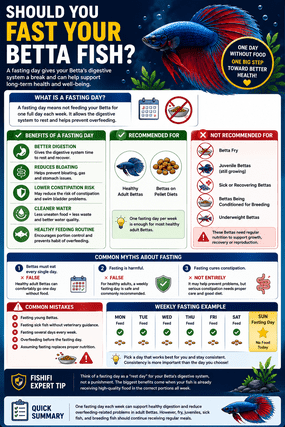
Should You Have a Fasting Day for Your Betta Fish?
One of the most common pieces of advice you’ll hear in the aquarium hobby is to give your Betta fish a fasting day once a week. While this practice is widely recommended, many beginners don’t understand why it’s beneficial or whether it’s necessary for every Betta.
A fasting day simply means not feeding your Betta for one full day. This short break gives the digestive system time to process any remaining food and may help reduce the risk of digestive issues caused by overfeeding. Since Bettas are opportunistic carnivores in the wild, they don’t eat on a perfectly regular schedule every day. There are naturally occurring periods when food is scarce, so a healthy adult Betta is well adapted to going without food for a short time.
When combined with proper daily feeding, a weekly fasting day can be a simple way to support long-term digestive health.
Why Is a Fasting Day Beneficial?
A weekly fasting day offers several potential benefits for healthy adult Bettas.
It can help:
- Give the digestive system time to rest.
- Reduce the risk of bloating and constipation.
- Lower the chance of swim bladder problems caused by overeating.
- Encourage more efficient digestion.
- Prevent unnecessary waste from accumulating in the aquarium.
- Reinforce healthy feeding habits for the owner.
While fasting is not a cure for illness, it can be a useful part of a balanced feeding routine when combined with good water quality and proper nutrition.
Which Betta Fish Should Have a Fasting Day?
A fasting day is generally suitable for:
- Healthy adult Bettas
- Bettas that receive daily pellet feedings
- Bettas that are occasionally fed protein-rich treats such as bloodworms
For these fish, skipping one day of feeding each week is considered safe and may provide digestive benefits.
Which Betta Fish Should NOT Fast?
Not every Betta should follow the same feeding schedule.
Avoid fasting:
- Betta fry
- Juvenile Bettas that are still growing
- Underweight Bettas
- Bettas recovering from illness
- Fish being conditioned for breeding
- Bettas receiving medication that requires regular feeding
These fish need a steady supply of nutrients to support growth, recovery, or reproduction.
How Often Should You Fast Your Betta?
For most healthy adult Bettas, one fasting day each week is sufficient.
More frequent fasting usually provides no additional benefit and may reduce overall nutrient intake if continued for long periods.
Many aquarists choose Sunday as a fasting day because it creates an easy-to-remember weekly routine, but any day of the week is perfectly acceptable. The important thing is consistency.
Common Myths About Fasting
- Myth 1: Bettas must eat every single day.
False.
Healthy adult Bettas can comfortably go one day without food.
- Myth 2: Fasting is harmful.
False.
For healthy adult fish, a weekly fasting day is generally considered safe and is commonly recommended by experienced aquarists.
- Myth 3: Fasting cures constipation.
Not entirely.
While fasting may help prevent digestive problems, serious constipation or illness should be addressed by identifying and treating the underlying cause rather than relying on fasting alone.
Common Mistakes
Avoid these mistakes:
- Fasting young Bettas.
- Fasting sick fish without veterinary guidance.
- Fasting several days every week.
- Overfeeding before the fasting day.
- Assuming fasting replaces proper nutrition.
Remember that a fasting day works best as part of an overall balanced feeding routine—not as a solution for poor feeding habits.
Fishifi Expert Tip
Think of a fasting day as a “rest day” for your Betta’s digestive system rather than a punishment or diet. The biggest benefits come when your fish is already receiving high-quality food in the correct portions throughout the rest of the week.
Foods Betta Fish Should Never Eat
Providing your Betta fish with a nutritious, protein-rich diet is one of the best ways to support its health, but knowing what not to feed is equally important. Many new Betta owners assume that if a food is safe for humans or other aquarium fish, it must also be safe for Bettas. Unfortunately, that’s not always the case.
Betta fish are obligate carnivores, meaning their digestive system has evolved to process animal-based protein rather than large amounts of plant material or carbohydrates. In their natural habitat across the shallow waters of Southeast Asia, Bettas feed mainly on insect larvae, mosquito larvae, worms, and other small aquatic invertebrates. Their short digestive tract is designed for this type of diet, making it less efficient at digesting foods that are high in starches, grains, or plant-based ingredients.
Because of these biological differences, many betta fish food commonly offered to other pets—or even other aquarium fish—can cause problems when fed to Bettas. Some foods provide very little nutritional value, while others may lead to digestive issues such as bloating, constipation, poor water quality, or long-term nutritional deficiencies. Certain foods can even be toxic and should never be offered under any circumstances.
Another common mistake is believing that all commercial fish foods are interchangeable. In reality, food formulated for goldfish, tropical community fish, or algae eaters is designed to meet the nutritional needs of those species—not Bettas. Although your Betta may eagerly eat almost anything you place in the aquarium, appetite alone should never be used as a measure of whether a food is appropriate.
Understanding which foods are safe, which should only be offered occasionally, and which should always be avoided will help you make better feeding decisions throughout your Betta’s life. A carefully planned diet not only supports healthy growth and vibrant coloration but also strengthens the immune system, improves digestion, and reduces the risk of many common health problems.
In the following sections, we’ll answer some of the most frequently asked questions from Betta owners, including whether Bettas can eat goldfish food, tropical fish food, fruits, vegetables, and even common household foods. You’ll also learn which foods should never be fed to a Betta and why choosing species-specific nutrition is one of the simplest ways to keep your fish healthy for years to come.
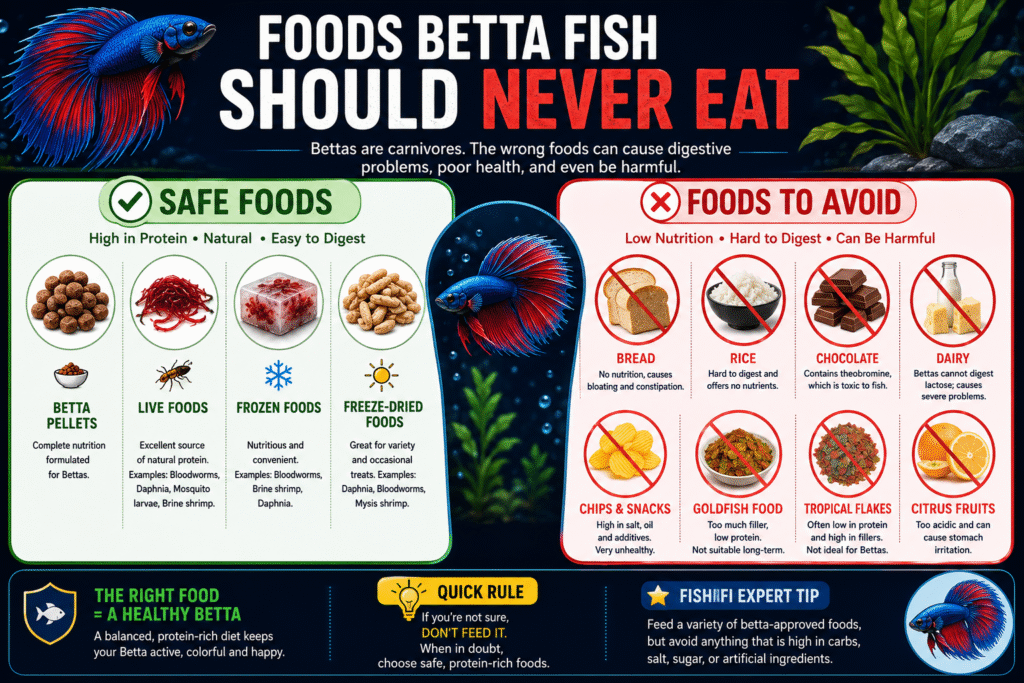
Human Foods to Avoid
Although many human foods seem harmless, they are not suitable for Betta fish and should never become part of their regular diet.
- Bread
Bread contains carbohydrates and yeast that Bettas cannot digest properly. It provides virtually no nutritional value and may contribute to bloating or digestive discomfort.
- Rice
Cooked or uncooked rice is another food that should be avoided. It lacks the high-quality protein Bettas need and can swell after absorbing water, increasing the risk of digestive problems.
- Crackers, Biscuits & Snacks
Processed snacks often contain salt, preservatives, oils, and artificial flavorings. These ingredients are unsuitable for aquarium fish and may negatively affect both your Betta’s health and water quality.
- Chocolate & Sweets
Chocolate contains compounds such as theobromine, which are toxic to many animals. Sugary foods also offer no nutritional benefit and should never be fed to fish.
- Dairy Products
Betta fish cannot digest milk, cheese, yogurt, and other dairy products because they lack the enzymes needed to process lactose. Feeding dairy can lead to digestive issues and poor water quality.
Fish Foods That Aren’t Suitable
Not all commercial fish foods are appropriate for Bettas.
- Goldfish Food
Goldfish food is designed for omnivorous fish and generally contains more plant material and less animal protein than Bettas require. While it may be used temporarily in an emergency, it should never replace Betta-specific food.
- Tropical Community Fish Flakes
Many tropical flakes contain lower protein levels and more fillers than Betta foods. They are acceptable only as a short-term substitute if no better option is available.
- Herbivore Fish Foods
Foods formulated for algae eaters or herbivorous fish contain excessive plant ingredients and do not meet a Betta’s nutritional requirements.
Other Betta Fish Food to Avoid
Some foods may seem natural but can still be harmful.
- Citrus Fruits
Oranges, lemons, limes, and grapefruit are highly acidic and unsuitable for Betta fish.
- Seasoned or Cooked Meat
Cooked chicken, beef, or processed meats often contain oils, spices, salt, and seasonings that Bettas cannot tolerate.
- Fried or Oily Foods
Foods cooked in oil can introduce unhealthy fats and quickly pollute aquarium water.
- Wild-Caught Insects
Although Bettas naturally eat insects, insects collected outdoors may carry pesticides, parasites, or harmful bacteria. Always use insects from trusted aquarium suppliers rather than collecting them yourself.
Why Feeding the Wrong Betta Fish Food Is Dangerous
Offering unsuitable foods may lead to several health problems, including:
- Poor digestion
- Bloating
- Constipation
- Swim bladder disorders
- Obesity
- Nutritional deficiencies
- Reduced immunity
- Poor water quality
- Increased risk of disease
Many of these problems develop gradually, making it important to provide a proper diet from the beginning rather than waiting until symptoms appear.
Safe vs. Unsafe Foods
| ✅ Safe Foods | ❌ Foods to Avoid |
|---|---|
| Betta Pellets | Bread |
| Live Foods | Rice |
| Frozen Foods | Chocolate |
| Freeze-Dried Foods | Dairy Products |
| Brine Shrimp | Chips & Snacks |
| Bloodworms | Seasoned Meat |
| Daphnia | Citrus Fruits |
| Mosquito Larvae | Goldfish Food (Regular Use) |
Fishifi Expert Tip
Whenever you’re unsure whether a food is safe, ask yourself one simple question:
“Would a wild Betta naturally eat this?”
If the answer is no, it’s usually best to avoid it. A diet based on high-quality Betta pellets, live foods, frozen foods, and occasional freeze-dried treats closely matches what Bettas have evolved to eat and provides the nutrition they need to thrive.
How Long Can a Betta Fish Go Without Food?
Whether you’re planning a weekend trip, preparing for a vacation, or simply worried because your Betta has stopped eating, one question often comes to mind: How long can a Betta fish go without food?
The good news is that healthy adult Betta fish are surprisingly resilient. Thanks to their slow metabolism and ability to store energy, they can survive for several days without food under the right conditions. However, it’s important to understand the difference between surviving and thriving. While a Betta may stay alive without food for an extended period, prolonged fasting can lead to weight loss, weakened immunity, stress, and a reduced ability to recover from illness.
How long a Betta can safely go without food depends on several factors, including its age, overall health, water temperature, activity level, and whether it has been receiving a balanced diet beforehand. Young Bettas, sick fish, and breeding fish have much higher nutritional demands than healthy adults and should never be left without food for extended periods.
Understanding these differences will help you make informed decisions when you’re away from home and ensure your Betta remains healthy even during unexpected situations.
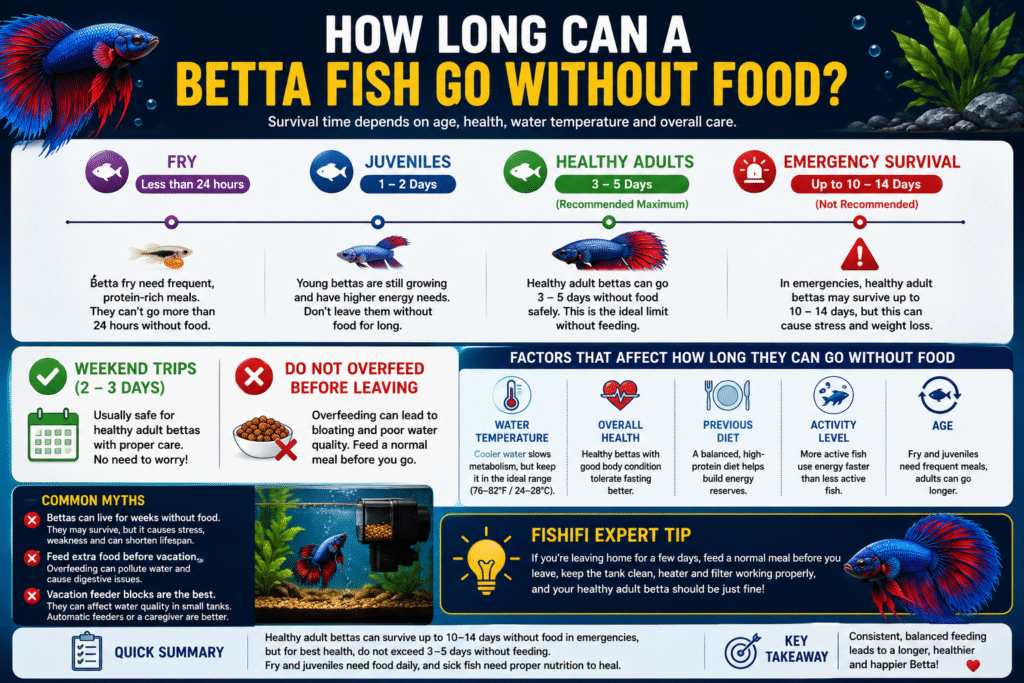
How Long Can a Healthy Adult Betta Fish Go Without Food?
A healthy adult Betta fish can generally survive up to 10–14 days without food under ideal conditions. However, this does not mean you should intentionally leave your Betta unfed for that long.
Most experienced aquarists recommend limiting food deprivation to no more than 3–5 days whenever possible. Beyond this point, your Betta may begin using stored body reserves, leading to weight loss and increased stress.
If you’re away for a weekend, there’s usually no need to worry. A healthy adult Betta that has been well-fed beforehand can comfortably go 2–3 days without eating.
For longer trips, it’s best to arrange for someone to feed your fish or use a reliable automatic feeder designed for aquarium fish.
How Long Can Betta Fry Go Without Food?
Betta fry are completely different from adult fish.
Because they are growing rapidly, fry require frequent, protein-rich meals throughout the day to support healthy development. Unlike adults, they have very limited energy reserves and cannot tolerate extended periods without food.
Most Betta fry should not go more than 24 hours without eating. Missing multiple feedings may slow growth, weaken the immune system, and reduce survival rates.
If you’re raising Betta fry, make sure a trusted person is available to feed them whenever you’re away.
How Long Can Sick or Weak Betta Fish Go Without Food?
A Betta recovering from illness should never be intentionally deprived of food unless specifically recommended during treatment.
Sick fish often have reduced energy reserves and need adequate nutrition to support healing and maintain immune function. Even if your Betta refuses food because of illness, it’s important to identify and treat the underlying cause rather than assuming it can simply “wait it out.”
If your Betta hasn’t eaten for several days and also shows symptoms such as clamped fins, rapid breathing, white spots, bloating, or unusual swimming behavior, investigate water quality and consider seeking advice from an experienced aquatic veterinarian or fish health specialist.
Factors That Affect How Long a Betta Can Go Without Food
Several factors influence how long a Betta fish can safely survive without eating.
- Age
Young Bettas require frequent meals, while healthy adults can tolerate longer periods without food.
- Water Temperature
Because Bettas are ectothermic animals, their metabolism depends on water temperature. In cooler water, their metabolism slows, reducing energy requirements. However, temperatures below the recommended range can also weaken the immune system and should not be used as a method to extend fasting.
- Overall Health
Healthy Bettas with good body condition tolerate short fasts better than fish that are already underweight or recovering from disease.
- Previous Diet
A Betta that has been consistently fed a balanced, high-protein diet generally has better energy reserves than one that has suffered from poor nutrition.
Survival vs. Healthy Feeding
It’s important to distinguish between survival and proper care.
Although a healthy Betta may survive without food for many days, prolonged fasting is not part of responsible fishkeeping. Regular, balanced feeding supports:
- Healthy growth
- Vibrant coloration
- Strong immunity
- Active behavior
- Proper muscle development
- Longer lifespan
Your goal should never be to test how long your Betta can survive without food, but rather to provide a consistent routine that keeps it healthy throughout its life.
Common Myths About Bettas Going Without Food
- Myth 1: Bettas can live for weeks without food.
Partly true. While some healthy adults may survive for up to two weeks, this is an emergency—not a recommended practice.
- Myth 2: Feed extra food before going on vacation.
False. Overfeeding before leaving often causes more harm than good. Uneaten food can pollute the water, and overeating increases the risk of bloating and digestive problems.
- Myth 3: Vacation feeder blocks are the best solution.
Not always. Many vacation feeder blocks dissolve slowly and can negatively affect water quality in small Betta tanks. Automatic feeders or a trusted caregiver are usually better options.
Fishifi Expert Tip
If you’re leaving home for two or three days, don’t overfeed your Betta beforehand. Feed a normal meal before you leave, ensure the aquarium is clean, check that the heater and filter are functioning properly, and your healthy adult Betta should be fine until you return.
Quick Summary
Healthy adult Betta fish can survive 10–14 days without food, but this should only occur in emergencies. For routine care, avoid leaving your Betta unfed for more than 3–5 days, and make special arrangements if you’ll be away longer. Fry, juvenile Bettas, and sick fish require much more frequent feeding and should never be left without food for extended periods.
What If Your Betta Fish Won’t Eat?
A healthy Betta fish is usually an enthusiastic eater, often swimming excitedly to the front of the aquarium as soon as it recognizes feeding time. So, when a Betta suddenly refuses food, it’s natural for owners to become concerned.
The good news is that a loss of appetite doesn’t always indicate a serious health problem. Bettas may temporarily stop eating due to stress, changes in their environment, poor water conditions, unsuitable food, or even minor fluctuations in temperature. In many cases, identifying and correcting the underlying cause is enough to restore their appetite within a few days.
However, if your Betta refuses food for an extended period or begins showing other symptoms such as lethargy, clamped fins, unusual swimming, rapid breathing, discoloration, or visible signs of disease, it should be treated as a warning sign that requires further investigation.
Understanding the possible reasons behind appetite loss will help you respond quickly and give your Betta the best chance of making a full recovery.
Common Reasons Why a Betta Fish Stops Eating
A Betta fish may refuse food for many different reasons. Some are completely harmless and temporary, while others require immediate attention.
Let’s explore the most common causes.
- Cold Water Temperature
One of the most frequent causes of appetite loss is water that is too cold.
Betta fish are tropical animals that rely on warm water to maintain a healthy metabolism. When the water temperature drops below the recommended range of 78–80°F (25.5–26.5°C), their metabolism slows significantly. As a result, they become less active, digest food more slowly, and often lose interest in eating.
A reliable aquarium heater and thermometer are essential for maintaining a stable environment. Avoid sudden temperature fluctuations, as rapid changes can stress your Betta and further reduce its appetite.
- Poor Water Quality
Even if the aquarium looks clean, harmful toxins such as ammonia and nitrite can build up in the water and affect your Betta’s health.
Poor water quality often causes:
- Loss of appetite
- Lethargy
- Clamped fins
- Stress
- Increased susceptibility to disease
Test your aquarium water regularly and maintain:
- Ammonia: 0 ppm
- Nitrite: 0 ppm
- Nitrate: Below 20 ppm
Regular water changes and proper filtration are the best ways to maintain excellent water quality.
- Stress
Stress is another major reason Bettas stop eating.
Common stressors include:
- Moving to a new aquarium
- Aggressive tank mates
- Loud vibrations
- Excessive handling
- Strong filter currents
- Sudden lighting changes
- Frequent changes to the aquarium layout
A stressed Betta may hide more often, become less active, and ignore food until it feels secure again.
Providing hiding places, live plants, and a consistent routine can significantly reduce stress.
- Illness or Disease
Loss of appetite is often one of the earliest signs of illness.
Watch for additional symptoms such as:
- White spots (Ich)
- Cotton-like growths (fungal infection)
- Torn or rotting fins
- Bloated abdomen
- Difficulty swimming
- Rapid breathing
- Pale coloration
If your Betta refuses food for several days and displays any of these symptoms, test the water immediately and begin appropriate treatment based on the suspected disease.
- Picky Eating
Some Bettas simply have food preferences.
A fish that refuses one type of pellet may eagerly accept another brand or a frozen bloodworm. Introducing a variety of high-quality Betta foods can help stimulate interest without compromising nutrition.
Avoid changing foods too frequently, but don’t hesitate to experiment with reputable Betta-specific products if your fish consistently rejects its meals.
- Aging
As Bettas grow older, they naturally become less active and may eat smaller portions.
An older Betta that remains alert, maintains a healthy body condition, and shows no signs of illness may simply require less food than it did when it was younger.
Continue offering small meals while monitoring its weight and behavior.
- Constipation or Overfeeding
Ironically, feeding too much can cause a Betta to stop eating.
Overfeeding may lead to bloating and constipation, making your fish feel full and uncomfortable.
If you suspect constipation:
- Skip feeding for one day.
- Check for bloating.
- Resume feeding with a small portion of easily digestible food, such as daphnia.
Preventing overfeeding is always easier than treating digestive problems.
Fishifi Expert Tip
If your Betta refuses food, don’t panic immediately. Start by checking the three most common causes: water temperature, water quality, and stress. These account for a large proportion of appetite problems and are often easy to correct before considering more serious illnesses.
Quick Summary
A Betta fish may stop eating due to cold water, poor water quality, stress, illness, picky eating, aging, or overfeeding. By observing your fish and checking basic aquarium conditions first, you can often identify the cause quickly and take the appropriate steps to restore its appetite.
Frequently Asked Questions (FAQs)
1. What is the best food for Betta fish?
The best betta fish food is a high-quality Betta pellet made with animal-based protein as the first ingredient. Since Bettas are carnivores, they also benefit from occasional live, frozen, or freeze-dried foods such as bloodworms, brine shrimp, and daphnia. A varied, protein-rich diet supports healthy growth, vibrant colors, and a strong immune system.
2. How often should I feed my Betta fish?
Healthy adult Betta fish should generally be fed once or twice a day in small portions. Younger Bettas require more frequent meals to support growth. Feeding a consistent amount at the same time each day helps maintain good digestion and reduces the risk of overfeeding.
3. How much should I feed my Betta fish?
Most adult Bettas need 2–4 high-quality pellets per meal, depending on the pellet size and the fish’s activity level. The food should be eaten within one to two minutes, and any leftovers should be removed to maintain good water quality.
4. Can Betta fish eat goldfish food?
Goldfish food can be used only as a temporary emergency option if Betta fish food is unavailable. It is not suitable as a regular diet because goldfish are omnivores, while Bettas are carnivores and require a much higher level of animal protein.
5. Can Betta fish eat tropical fish flakes?
Occasionally, yes—but Betta-specific food is a much better choice. Many tropical fish flakes contain lower protein levels and more plant-based fillers, making them less suitable for the nutritional needs of Betta fish.
6. Can Betta fish eat bloodworms every day?
No. Although bloodworms are rich in protein and highly nutritious, they are also relatively high in fat. Feeding them daily may increase the risk of obesity and digestive problems. They are best offered as a treat one or two times per week.
7. Can Betta fish eat shrimp?
Yes. Bettas can safely eat brine shrimp and mysis shrimp as part of a balanced diet. These betta fish food are rich in protein and make excellent occasional treats, but they should supplement—not replace—high-quality Betta pellets.
8. Can Betta fish eat vegetables?
Not as part of their regular diet. Bettas are carnivores and obtain most of their nutrition from animal protein. Vegetables provide little nutritional value for them and should not replace foods specifically designed for Betta fish.
9. Can Betta fish eat bread or rice?
No. Bread, rice, crackers, and other human foods are unsuitable for Betta fish. They offer little nutritional value and may cause digestive problems, bloating, and poor water quality.
10. Why is my Betta fish always hungry?
Bettas are opportunistic feeders and naturally eat whenever food is available. A fish that eagerly begs for food is not necessarily starving. Following a consistent feeding schedule with appropriate portion sizes is the healthiest approach.
11. Why is my Betta fish not eating?
Loss of appetite can result from cold water, poor water quality, stress, illness, overfeeding, or simply adjusting to a new environment. Check your aquarium conditions first, especially water temperature and water quality, before assuming your Betta is sick.
12. Can Betta fish go one day without food?
Yes. Healthy adult Bettas can safely go without food for one day, and many experienced aquarists include a weekly fasting day to support healthy digestion. However, fry, juvenile Bettas, and sick fish should not be fasted.
13. How long can a Betta fish survive without food?
A healthy adult Betta can survive up to 10–14 days without food in emergencies, but this is not recommended. For planned trips, avoid leaving your Betta unfed for more than 3–5 days, and arrange proper care for longer absences.
14. Should I remove uneaten food from the aquarium?
Yes. Uneaten food quickly decomposes, increasing ammonia levels and reducing water quality. Removing leftover food after feeding helps keep the aquarium clean and lowers the risk of disease.
15. What foods should Betta fish never eat?
Betta fish should never be fed bread, rice, chocolate, dairy products, processed snacks, citrus fruits, or seasoned human foods. These foods do not meet their nutritional needs and may cause digestive problems or other health issues.
Fishifi Expert Tip
A healthy Betta doesn’t need expensive betta fish food —it needs the right foods. Feed high-quality Betta pellets as the staple diet, supplement them with occasional live, frozen, or freeze-dried foods, avoid overfeeding, maintain excellent water quality, and stick to a consistent feeding routine. These simple habits will do more for your Betta’s health than constantly changing foods or chasing the latest products.
Conclusion
Give Your Betta the Right Food, and It Will Reward You with a Longer, Healthier Life
Feeding your Betta fish isn’t just about dropping a few pellets into the aquarium—it’s one of the most important aspects of responsible fish care. A balanced, protein-rich diet supports healthy growth, vibrant colors, strong immunity, and a longer lifespan, while poor feeding habits can lead to digestive issues, obesity, poor water quality, and preventable diseases.
Throughout this guide, you’ve learned what Bettas eat in the wild, how to choose the best food, how much and how often to feed them, which foods to avoid, and what to do if your Betta stops eating. You also learned the importance of portion control, maintaining a consistent feeding routine, and observing your fish’s behavior rather than simply feeding whenever it appears hungry.
Remember that every Betta is unique. Some are active and energetic, while others are calmer or more selective about food. By paying attention to your Betta’s appetite, body condition, and overall behavior, you can adjust its feeding routine to meet its individual needs.
Good nutrition goes hand in hand with proper aquarium care. Clean water, stable temperatures, regular maintenance, and a stress-free environment all work together with a healthy diet to keep your Betta thriving.
Whether you’re caring for your very first Betta or you’ve been keeping fish for years, the principles remain the same: feed high-quality foods, avoid overfeeding, provide variety in moderation, and maintain excellent water quality. These simple habits will help your Betta live a healthier, happier life.